If you’re setting up card payments for the first time or upgrading existing equipment, one of the first questions is usually the same: how much is this actually going to cost?
The answer depends on more than just the hardware. Credit card terminal cost in 2026 involves the upfront price of the device, the ongoing software and processing fees, and the type of terminal that fits your specific business. Getting the full picture upfront helps you budget properly and avoid surprises once you’re up and running.
Here’s a complete breakdown of what credit card terminals cost, what drives those costs, and how to get a credit card machine for a small business without overspending on equipment or processing fees.
Types of Credit Card Terminals and Their Costs
Not all terminals are the same. The right type depends on your business environment, transaction volume, and what you need the terminal to do beyond processing payments. Many businesses compare the Top 10 Wireless POS Systems for Fast Transactions to identify solutions that offer speed, reliability, and the features needed to support daily operations while ensuring a smooth customer payment experience.
Basic Mobile Card Readers
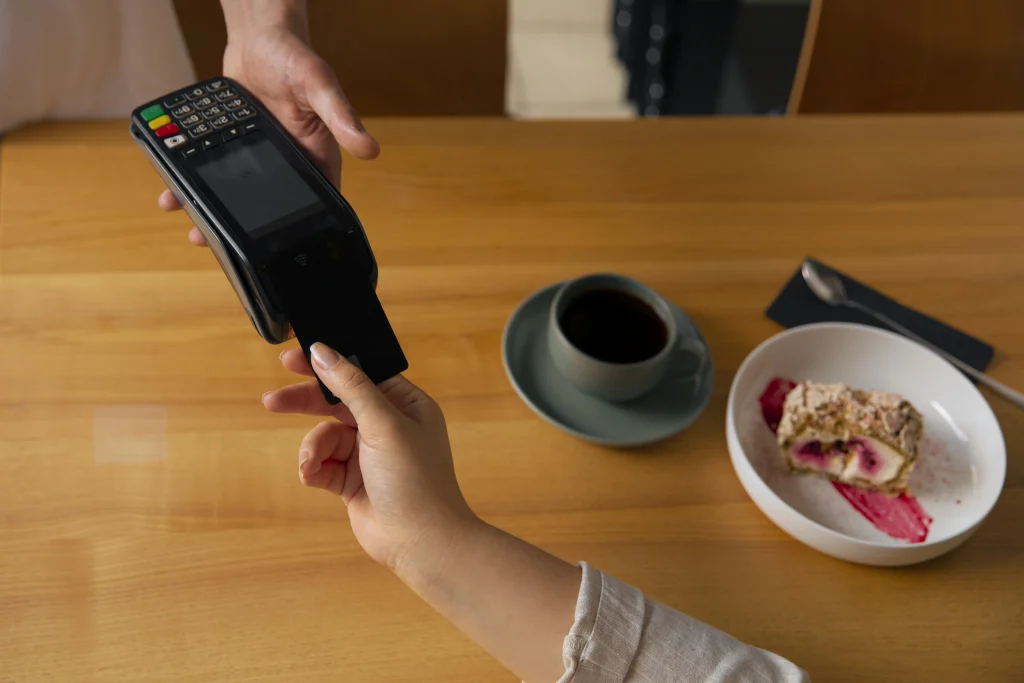
Mobile card readers are the entry-level option, a small device that connects to a smartphone or tablet via Bluetooth or the headphone jack. They are the most affordable hardware on the market and work well for low-volume businesses, market stalls, food trucks, and mobile service providers.
| Feature | Details |
| Hardware cost | $20 to $100 |
| Payment methods | Chip, swipe, some support tap/contactless |
| Software | Paired app — often free with a processor account |
| Best for | Low volume, mobile, pop-up, or occasional use |
| Limitation | Requires a smartphone or tablet to operate |
Countertop Credit Card Terminals
The classic fixed terminal sits at a checkout counter and processes payments independently without needing a separate device. These are the most common terminals in retail, hospitality, and service businesses.
| Feature | Details |
| Hardware cost | $150 to $600 |
| Payment methods | Chip, swipe, tap, contactless, NFC wallets |
| Connectivity | Ethernet, WiFi, or both |
| Best for | Retail stores, salons, service businesses, cafes |
| Popular models | Ingenico Desk series, Verifone VX520, PAX A920 |
Wireless and Portable Terminals
Wireless terminals operate independently from a fixed connection and can move around a business environment. They’re popular in restaurants where table-side payment is preferred, and in businesses where staff move between areas.
| Feature | Details |
| Hardware cost | $200 to $700 |
| Connectivity | WiFi or 4G/LTE cellular |
| Payment methods | Chip, swipe, tap, NFC wallets |
| Best for | Restaurants, table service, tradespeople, delivery |
| Battery life | Typically, 8 to 12 hours of active use |
Full POS Systems with Integrated Payment
A full POS system combines payment processing with inventory management, sales reporting, staff management, and customer data tools. The terminal is one component of a larger system that runs the operational side of the business.
| Feature | Details |
| Hardware cost | $800 to $3,000+ depending on components |
| Typical components | Touchscreen terminal, receipt printer, cash drawer, customer display |
| Software | Monthly subscription typically $30 to $200+ |
| Best for | Busy retail, restaurants, multi-staff operations |
| Advantage | Payment plus full business management in one system |
Credit Card Machine Charges: Beyond the Hardware
The hardware cost is the one-time part of the equation. The ongoing credit card machine charges, processing fees, software subscriptions, and account fees are what businesses pay every month and on every transaction. These often add up to more than the hardware over time.
Payment Processing Fees
Every credit card machine charges a percentage of the sale. This is the processing fee, and it’s charged by your payment processor. The rate varies by card type, payment method, and pricing model.
| Transaction Type | Typical Processing Fee Range |
| Chip card in-person | 1.5% to 2.5% |
| Contactless tap payment | 1.5% to 2.5% |
| Magnetic stripe swipe | 1.7% to 2.7% |
| Manually keyed transaction | 2.0% to 3.5% |
| Online or card-not-present | 2.2% to 3.5% |
Monthly Software and Account Fees
Most payment processors charge monthly fees on top of per-transaction costs. These cover account maintenance, software access, reporting tools, and support. Typical monthly fees range from zero for basic mobile processing accounts to $50 to $200 per month for full POS software subscriptions.
Additional Fees to Watch for
- PCI compliance fees: typically $50 to $150 per year for compliance certification
- Chargeback fees: usually $15 to $25 per disputed transaction
- Early termination fees: charged if you exit a contract before the end of a fixed term
- Statement fees: Some processors charge for monthly statements
- Batch settlement fees: small fees charged when daily transactions are settled
Always ask for a full fee schedule before signing with any processor. The headline processing rate rarely tells the complete story.
Total Cost of Ownership: What to Budget
| Setup Type | Upfront Hardware Cost | Estimated Monthly Ongoing Cost |
| Mobile card reader only | $20 to $100 | $0 to $20 (processing fees apply per transaction) |
| Single countertop terminal | $150 to $600 | $20 to $80 (software plus processing) |
| Wireless restaurant terminal | $200 to $700 | $30 to $100 (software plus processing) |
| Full POS system (single station) | $800 to $2,000 | $50 to $200 (software subscription plus processing) |
| Multi-station POS setup | $2,000 to $5,000+ | $100 to $400+ (multiple licenses plus processing) |
Buying v. Leasing a Credit Card Terminal
Some processors offer terminal leasing as an alternative to outright purchase. This spreads the upfront cost but almost always costs significantly more over the full lease term.
| Option | Pros | Cons |
| Buy outright | Lower total cost, you own the equipment, no contract lock-in | Higher upfront investment |
| Lease | Lower upfront cost, equipment may be replaced if faulty | Higher total cost over the term, often locked into the processor |
| Free the terminal from the processor | No hardware cost | Usually tied to higher processing rates or longer contracts |
In most cases, buying a terminal outright is the better financial decision for established businesses. Leasing is generally worth avoiding unless cash flow makes the upfront cost genuinely prohibitive.
What Affects Credit Card Terminal Cost Most
- Terminal type: mobile readers are cheapest, full POS systems are most expensive
- Brand and model: Premium terminals from Ingenico, Verifone, or PAX cost more than budget alternatives
- Whether you buy, lease, or receive hardware free from a processor
- Your processing volume: higher volume businesses often negotiate better rates
- The processor you choose: fee structures vary significantly between providers
- Contract length: Month-to-month flexibility costs more per month than a locked-in rate
Final Thoughts
The credit card terminal cost question doesn’t have a single answer because the right terminal and the right processor depend entirely on what kind of business you’re running and how you need to take payments.
What’s consistent across every situation is that the hardware cost is just the starting point. The ongoing processing fees and software subscriptions are what businesses actually live with day to day. Understanding the full cost picture before you choose a terminal saves money and avoids the frustration of switching later. Let’s connect today and find the right terminal for your business.
Swyft POS offers a range of terminal options built for different business types. If you want help finding the right fit for your setup and budget, we’re here to walk you through it.
FAQs
1. How much does a credit card terminal cost?
Basic mobile card readers cost $20 to $100. Standard countertop terminals run $150 to $600. Wireless portable terminals typically cost $200 to $700. Full POS systems with integrated payment range from $800 to $3,000 or more, depending on components. All hardware costs are separate from ongoing processing and software fees.
2. What are the ongoing credit card machine charges?
Ongoing charges include per-transaction processing fees typically ranging from 1.5 percent to 3.5 percent depending on card type and payment method, monthly software or account fees ranging from $0 to $200, and occasional additional fees for PCI compliance, chargebacks, and statement generation.
3. Is it better to buy or lease a credit card terminal?
Buying is almost always the better financial decision for established businesses. Leasing spreads the upfront cost but typically costs significantly more over the full term and often locks you into a specific processor. Free terminals from processors usually come with higher processing rates or longer contract commitments.
4. What type of credit card terminal is best for a small business?
It depends on your business type. A mobile card reader suits low-volume or mobile operations. A countertop terminal works well for most fixed retail and service businesses. A wireless terminal suits restaurants and businesses where staff move around. A full POS system is best for operations that need payment, plus inventory, reporting, and staff management.
5. Are there hidden fees with credit card terminals?
Yes, commonly. Always ask processors for a complete fee schedule before signing. Common additional charges include PCI compliance fees, chargeback fees, early termination fees, batch settlement fees, and statement fees. The headline processing rate rarely reflects the full monthly cost.