Did you know? The POS industry is experiencing strong growth, with the global POS software market estimated at $13.53 billion in 2025 and projected to reach $165.17 billion by 2030.
With technologies becoming more advanced with each passing day, the rise of POS systems and relevant tech is definitely expected. From cashless payment options to online ones, we have already crossed a major threshold and stepped into digital finance. Nowadays, businesses are looking forward more actively to electronic payment solutions. And that’s where a debate comes in: what are the key differences between a POS system and a payment terminal?
Initially, this could be confusing for new business owners, but don’t worry. This quick guide will solve all your queries regarding payment processing. Let’s dive into it without any further ado.
What is a POS System?
A POS system is basically a combination of hardware and software that work together to accept customer payments, streamlining business operations, and providing added features. They are becoming increasingly popular in restaurants, cafes, and retail shops. Here’s a quick look at some key features of POS systems.
- Track various sales analytics and purchasing metrics
- Manage employees with timekeeping and payroll systems
- Update and track inventory in real time with accuracy
- Run royalty programs and increase value among customers
- Accept multiple payment methods (cash, cards, mobile wallets, contactless)
- Generate detailed reports for taxes, revenue, and profitability
- Provide customizable digital and printed receipts
- Integrate seamlessly with eCommerce platforms
What is a Payment Terminal?
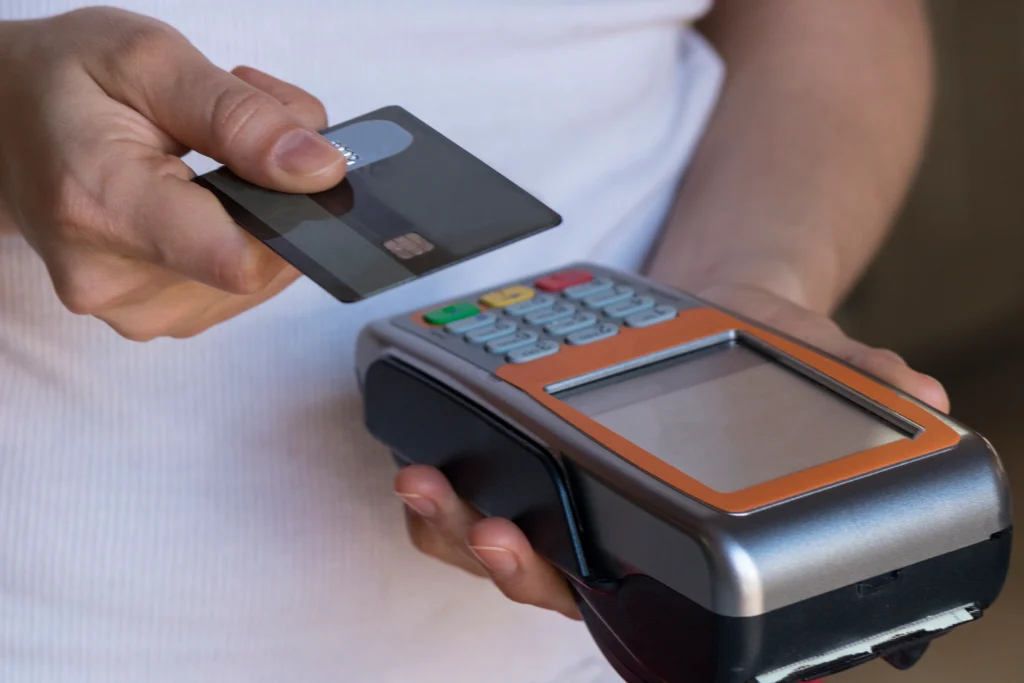
A payment terminal is much more simple as compared to POS systems. Its very basic purpose is to capture customers’ card data. As a hardware device, payment terminals are specifically manufactured to accept and process card transactions.

- Accept a wide range of payments, including chip, tap (NFC), and mobile wallets
- Provide secure transactions with encryption and PCI compliance
- Process payments quickly with minimal downtime
- Offer digital and printed receipt options
- Integrate smoothly with POS and business software
- Support offline mode for uninterrupted sales
- Handle multi-currency and international payments
- Deliver real-time reporting and reconciliation tools
Key Differences Between POS Systems and Payment Terminals
While we have now seen the features of the POS platform and payment terminal separately, let’s now keep them side by side with their key differences.
| Cloud updates, vendor support, and advanced troubleshooting | POS System | Payment Terminal |
| Functionality | Full business management tool (sales, inventory, staff, reports) | Primarily processes card and digital payments |
| Hardware & Software | Includes touchscreen, software, receipt printers, scanners | Compact device with limited built-in features |
| Data & Reporting | Advanced sales analytics, inventory tracking, customer insights | Basic transaction records only |
| Integration | Connects with accounting, CRM, loyalty, and eCommerce platforms | Minimal or no integration options |
| Cost & Scalability | Higher upfront cost but scalable for growing businesses | Lower cost, ideal for simple or small setups |
| Customer Features | Loyalty programs, personalized offers, CRM tools | Limited to payment acceptance, no customer engagement tools |
| Employee Tools | Timekeeping, payroll, role-based access control | Not applicable |
| Customization | Customizable dashboards, receipts, tax settings, and workflows | Very limited customization (basic settings only) |
| Mobility | Can be mobile (tablet POS) but often larger setups with hardware | Highly portable, pocket-sized devices |
| Support & Updates | Cloud updates, vendor support, advanced troubleshooting | Basic support, firmware updates only |
With these differences being visible, you can easily decide what’s much better for your business. Ensure to make the decision while keeping all the aspects in your mind and their outcomes for your business.
Benefits of a POS System
Looking forward to getting a POS system? Here are a few benefits that will help you keep on holding the rope.
Streamlined Operations
The best part of getting a POS system is its accuracy. It safeguards the entire system in case an employee makes a mistake during checkout. From reduced human error to technical glitches, a POS system covers it up while not costing the business money.
Data-driven Insights
Along with the POS system, you get data-driven insights that are far more accurate and can help you avoid making wrong decisions. It provides deep analytics by collecting and analyzing transactions, sales, and customer data while making strategic decisions.
Better Customer Experience
POS systems are particularly designed with the concept of enhancing customer experience while making it more efficient and secure. With features like quick checkouts, loyalty programs, and auto-inventory updates, it builds a loyal customer base for the business.
Scales with Growth
A well-maintained and secure POS system fosters business growth while improving operational efficiency and offering scalability. When streamlining the transactions, it manages the inventory in real-time, which results in less loss and sustainable expansion.
A Few Cons to Hold On
- Can be expensive with a high upfront cost
- Might seem complex and require a learning curve
- Is dependent on the Internet and connectivity
- Needs ongoing maintenance and updates
Benefits of a Payment Terminal
For those who are still looking forward to differentiating between a POS platform and a payment terminal, here are a few benefits of the latter so you can make the right decision.
Affordable and Quick Set-up
Payment terminals come with their own ease of set-up and are far more affordable than the POS systems. They often do not require any additional support or maintenance once they are all set up. This makes them amazing for the businesses that have simple processes.
Simple and Portable
With payment terminals, you get portability and simplicity as already added-ons. They are super fast to launch and keep maintained without any expensive upgrades. Also, they are compact and lightweight, allowing businesses to take payments from anywhere.
Reliable for Basic Needs
Super-fast and secure, payment terminals are specifically designed to process payments quickly. This ultimately reduces the wait time of the customers.
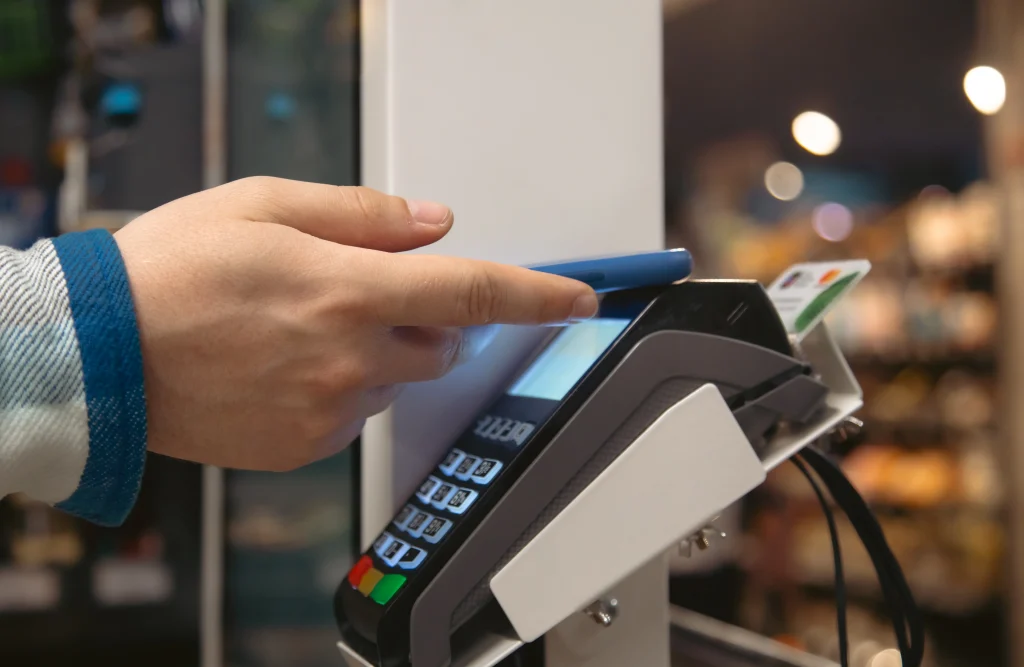
Also, with encryption and PCI compliance, they are extremely secure for businesses and consumers.
Accepts Multiple Payment Types
Nowadays, modern payment terminals accept all types of payment, from chip cards to contactless (NFC) and mobile wallets. This, in return, gives the customers flexibility in whatever mode they want to pay for the order while upgrading their satisfaction level.
A Few Cons to Hold On
- Limited features beyond payment
- Not recommended for large businesses
- May charge extra fees
- Very minimal personalized options
Which One Should You Choose: POS System OR Payment Terminal?
Now that you have a clear list of features, differences, and benefits for the POS platform and payment terminal, let’s talk about which one you should choose. Have a look at the table below and decide accordingly.
| POS System | Payment Terminal |
| Best for businesses aiming for growth | Best for small or mobile sellers |
| Offers data-driven management tools | Simple and budget-friendly |
| Scales with business needs | Reliable for basic transactions |
Final Thoughts
With all that information mentioned above, this guide comes to an end. We believe it has answered a lot of your unasked questions about the two most popular payment methods. With you now knowing the key differences, features, and benefits, decision-making would become a lot easier.
For any further assistance with POS systems and terminals, you can contact us at Swyft POS — our experts are ready to guide you every step of the way!
Frequently Asked Questions
1. What is the main difference between a POS system and a payment terminal?
A POS system manages multiple aspects of business operations like sales, inventory, and employees, while a payment terminal is focused mainly on accepting and processing payments.
2. Which is better for small businesses?
Small businesses with simple needs often benefit from payment terminals due to their low cost and ease of use, while growing businesses may prefer POS systems for scalability.
3. Do POS systems cost more than payment terminals?
Yes, POS systems usually involve higher upfront costs and ongoing software fees, whereas payment terminals are cheaper but offer fewer features.
4. Can payment terminals integrate with POS systems?
Many modern payment terminals integrate seamlessly with POS software, allowing businesses to combine simple payment acceptance with advanced management features.
5. Which option improves customer experience more?
POS systems enhance customer engagement through loyalty programs, receipts, and personalized offers, while payment terminals provide fast, secure, and convenient transactions.