The morning rush is the defining operational challenge of every coffee shop. From roughly 7 to 9 AM, a well-positioned cafe can process more transactions than at any other two-hour window of the day. How fast and smoothly that window runs depends heavily on the capability of the point of sale system behind the counter.
The best cafe point of sale system for a coffee shop is not simply a payment terminal. Like any modern point of sale system, it serves as an operational hub that coordinates ordering, payment, preparation, and customer flow. It is an operational hub that coordinates ordering, payment, preparation, and customer flow. The right coffee shop POS features can meaningfully reduce wait times, increase per-hour transaction volume, and improve the customer experience during the hours that matter most.
Why the Morning Rush Is a POS Problem
The Operational Bottlenecks
Where Time Gets Lost
In most coffee shops, wait time during the rush is not primarily a preparation speed problem. It is a system coordination problem. Time is lost at the point of order entry when the system is slow or requires too many steps. Time is lost at payment when the terminal cannot keep pace with transactions. Time is lost in production when baristas lack clear, organized queue visibility. A coffee shop POS system that addresses all three of these bottlenecks reduces total wait time more than any single operational change.

What Customers Experience During Peak Hours
Research consistently shows that perceived wait time in a coffee shop is as important as actual wait time. Customers who can see visible movement in the queue, who feel their order was taken accurately and quickly, and who are not left uncertain about where their order is in the process report higher satisfaction even when actual wait times are similar to competitors. The best cafe point of sale systems support this perception as well as the operational reality.
The Most Impactful Coffee Shop POS Features for Rush Hour
Feature 1: Fast Transaction Processing
Why Speed at the Point of Sale Matters
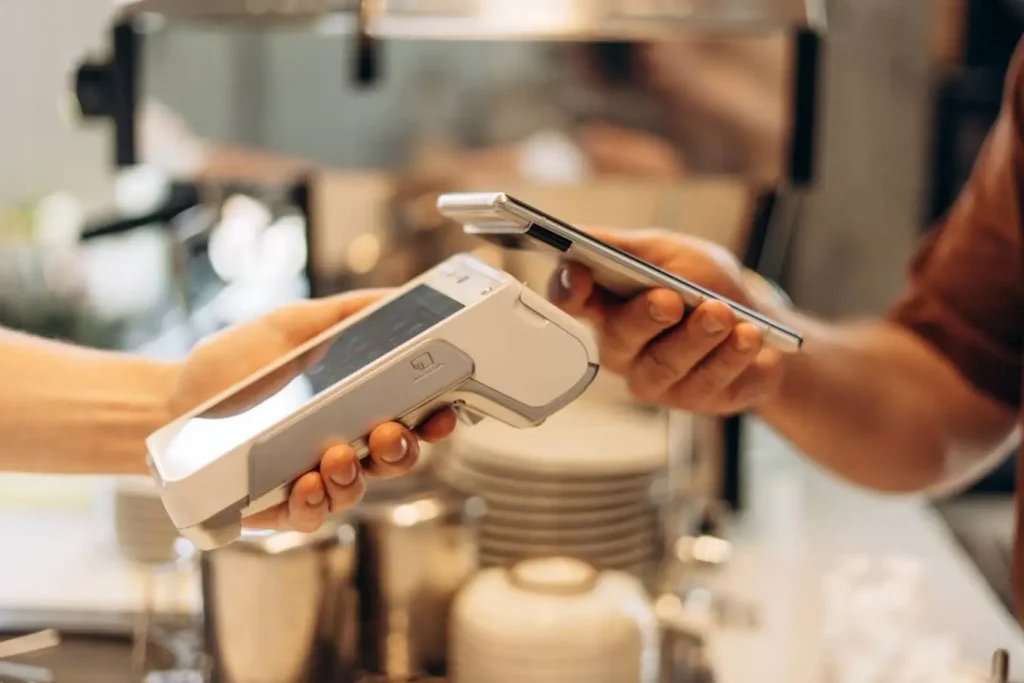
Every second added to the payment process compounds across the morning rush queue. A coffee shop POS system that processes contactless payments, chip cards, and mobile wallets quickly and reliably eliminates one of the most frustrating wait time contributors. Payment processing speed is determined by both the hardware quality of the terminal and the network reliability of the processing connection. Businesses evaluating new systems should understand the difference between a POS system and a payment terminal, since both play a role in transaction speed during peak hours. Both need to perform consistently during peak hours.
Payment Methods That Speed Up the Queue
- Contactless tap payments: the fastest payment method for high-volume morning environments
- Mobile wallet support including Apple Pay and Google Pay: customers who pay with their phone move through faster
- Stored card on file for regulars: repeat customers can pay without presenting a card each visit
- QR code ordering and payment: allows customers to initiate their order before reaching the counter
Feature 2: Mobile and Handheld Ordering
Taking Orders Before Customers Reach the Counter
One of the most effective morning rush strategies is extending the order-taking point beyond the single counter position. Coffee shop POS features that support handheld devices allow staff to take orders from customers waiting in the queue before they reach the terminal. By the time a customer arrives at the counter, their order is already in the system and production has potentially already started. This alone can reduce perceived and actual wait time significantly during peak periods.
Feature 3: Kitchen Display System Integration
Replacing Paper Tickets with Digital Production Queues
A kitchen display system (KDS) connected to the coffee shop POS system shows barista orders in real time on a screen rather than relying on paper tickets or verbal communication. This type of workflow improvement is one of the key reasons many operators evaluate what to look for in a restaurant POS system when upgrading their technology stack. This reduces errors, speeds up production handoffs, and gives baristas clear visibility of the full order queue without needing to manage physical slips. During the morning rush, when the volume of concurrent orders is highest, KDS integration is one of the highest-impact coffee shop POS features for reducing overall wait time.
Feature 4: Customer-Facing Display
Reducing Uncertainty in the Queue
A customer-facing display shows customers their order total and item list as it is entered by the server. This eliminates order confirmation errors at the payment stage, speeds up the transaction because the customer can see and verify rather than hearing and remembering, and creates a transparency that improves customer confidence in accuracy. For coffee shops where order customization is common, this feature pays significant dividends in reduced correction time.
Feature 5: Pre-Order and Mobile Ordering Integration
Moving Orders Upstream of the Rush
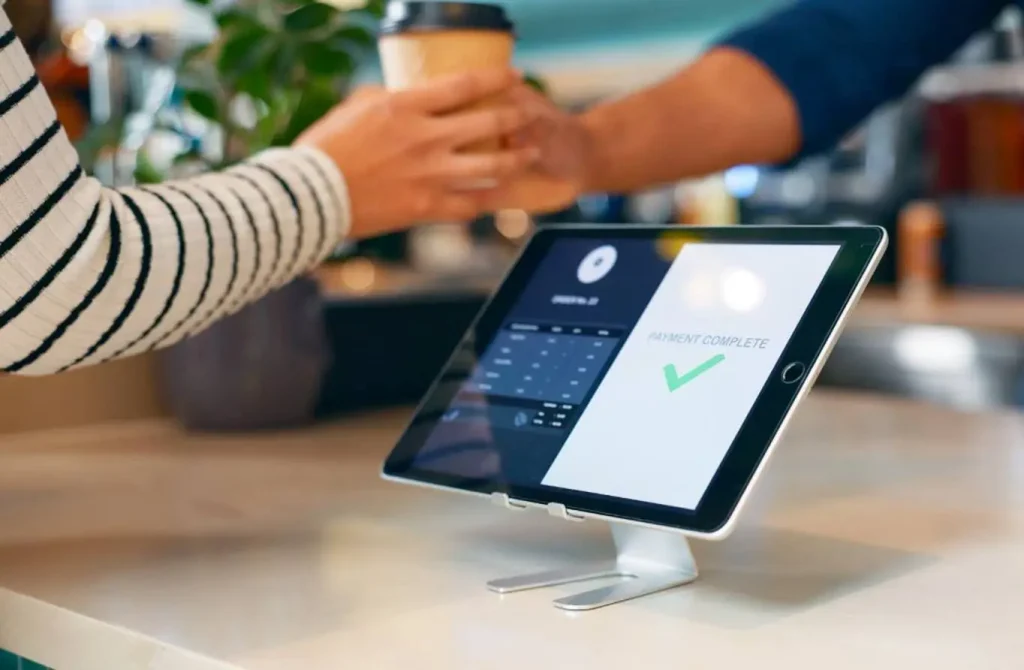
The best cafe point of sale systems support integration with mobile pre-order apps that allow customers to place and pay for their order before arriving at the shop. For coffee shops near transit hubs, office buildings, or universities, a meaningful percentage of regular customers will use a pre-order option if it is available and well-implemented. Pre-orders remove those transactions entirely from the physical queue and allow production to begin before the customer arrives.
Feature 6: Loyalty Program Integration
Speeding Up Repeat Customer Transactions
Regular customers represent a disproportionate share of morning rush volume. A coffee shop POS system with integrated loyalty tracking allows repeat customers to be identified quickly by phone number, app scan, or stored card, applying their loyalty points without adding steps to the transaction. Loyalty programs that require separate app logins, physical cards, or manual entry slow down exactly the high-frequency transactions they are supposed to reward.
Coffee Shop POS Features Comparison
| Feature | Impact on Wait Time | Implementation Complexity | Priority |
| Fast contactless payment processing | High: reduces payment step duration | Low: hardware and processor selection | Critical |
| Handheld mobile ordering | Very high: extends order point into the queue | Medium: requires additional devices and training | High |
| Kitchen display system | High: eliminates paper ticket handling | Medium: requires display hardware and setup | High |
| Customer-facing display | Medium: reduces confirmation errors | Low: add-on display hardware | Medium |
| Pre-order and mobile ordering | Very high: removes orders from physical queue | High: app integration required | High |
| Loyalty program integration | Medium: speeds up repeat customer transactions | Low to medium: depends on system | Medium |
| Split payment handling | Low to medium: reduces complexity for groups | Low: software feature | Low to medium |
What to Look for in a Coffee Shop POS System
Evaluation Criteria Beyond Features
Reliability During Peak Hours
The best coffee shop POS features are worthless if the system goes down at 8:15 AM on a Tuesday. That’s why understanding whether a POS system can run without internet is critical before choosing a solution for a high-volume coffee shop. Offline payment processing capability, meaning the ability to continue taking payments when the internet connection is interrupted, is a non-negotiable requirement for any busy coffee shop POS system. Check that any system you evaluate has a robust offline mode before committing.
Staff Training Time
During the morning rush, your staff does not have time to think about the POS system. It needs to be intuitive enough that common transactions are completed without hesitation. Evaluate how long staff training takes on any new system and whether the interface is genuinely fast to navigate under pressure rather than just easy to navigate when relaxed.
Reporting and Analytics
The best cafe point of sale system for a coffee shop gives you the data to optimize the rush: which items slow production most, at what time volume peaks, how average transaction times vary by payment method, and which staff configurations produce the fastest throughput. This data is only available if the system captures and reports it in a usable format.
Final Thoughts
Reducing morning rush wait times is a POS system challenge as much as it is a staffing or production challenge. The coffee shop POS features that make the biggest difference are those that speed up order entry, move payment faster, give production teams clear real-time visibility, and allow regular customers to move through the queue without friction.
Investing in the right POS system for your coffee shop is not just an operational decision. It is a customer experience decision that determines whether your morning rush is a source of loyalty or a source of lost customers who walked to the competitor down the street.
Swyft POS provides point of sale solutions built for the specific demands of cafe and coffee shop environments. If you want to discuss how the right system can reduce your morning rush wait times, reach out to us today.
FAQs
1. What POS features matter most for reducing coffee shop wait times?
The highest-impact features are fast contactless payment processing, handheld mobile ordering that extends the order point into the queue, kitchen display system integration, and pre-order capability that removes orders from the physical queue entirely.
2. What is the best cafe point of sale system for a busy coffee shop?
The best system combines fast payment processing across all card and mobile wallet types, handheld ordering support, kitchen display integration, offline payment capability, integrated loyalty tracking, and reporting that gives operators data to optimize their rush hour operations.
3. Can a POS system work without internet during the morning rush?
Yes, and it must. Any coffee shop POS system worth using has offline payment processing capability that stores transactions locally and syncs when connectivity is restored. An internet outage at 8 AM that takes the payment system down is a significant operational and customer experience failure.
4. How does a kitchen display system reduce wait times?
A KDS shows barista orders in real time on a screen rather than via paper tickets or verbal communication. It reduces errors, speeds up production handoffs, and gives baristas clear queue visibility without managing physical slips. During high-volume periods, this coordination improvement meaningfully reduces overall wait times.
5. Do loyalty programs actually help speed up the coffee shop queue?
When integrated directly into the POS system, yes. Loyalty programs that identify customers instantly by phone number or stored card and apply rewards without additional steps speed up repeat customer transactions. Programs requiring separate app logins or manual entry slow down exactly the high-frequency transactions they are meant to serve.